Monday, August 24, 2015

A HITCHHIKERS GUIDE TO THE STOCK MARKET


   When I was an undergrad at Cornell, I used to walk up the hill past the Johnson Art Museum every day.  It was a giant building shaped like an old-fashioned school desk.  At the time, I thought the money for the building had come from one of the Seward Johnsons of Johnson and Johnson fame.  I learned later, that in fact, the money had come from the other Johnson family, SC Johnson. 

   Why am I writing about this?  Because SC Johnson is the largest privately held company in the world and the maker of such popular products as Windex and Pledge.  The family made its fortune on Saran Wrap and they never went public.  You cannot buy stock in SC Johnson no matter how much you might want to.
   
   The question I want you to ponder is this:  In all of this market turmoil has the value of the SC Johnson company changed?

   Stock prices go up and they go down, but the underlying value of the companies that those stocks represent does not change.   There is no question that companies like Apple, Coca-Cola, General Electric, and Next Era Energy (Florida Power & Light) have value.  There is also no question that most of these companies (and their peers) will have greater value in 5, 10, and 20 years.  They will have greater value because they will pay a larger dividend per share than they do today.

   I expect that the correction we have seen over the past few days to be short lived.   Today’s activity is very informative.  Panicked investors stewed over the weekend and lined up to get out this morning.  The market went down over 1000 points at the open and then rallied back.


   As I write this the market is down around 200 points and a number of stocks we hold have moved into positive territory.  My message is, DON’T PANIC.  People that gave into their fears over the weekend are already regretting that decision.

Wednesday, April 29, 2015

The Real Secret of Dividend Investing


In 1917,  the Dodge Brothers, John and Horace, sued the Ford Motor Company because they wanted a dividend.  Two years later, a final Judgment was entered in favor of the Plaintiff shareholders in the amount of $19.3 million.   The Michigan Supreme Court looked past Henry Ford's argument that he wanted to put "the greatest share of our profits back in the business" and held that "[a] business corporation is organized and carried on primarily for the profit of the stockholders."

There are essentially three ways to value a business.  All of those methods involve multiplying either the earnings, the revenues, or the dividends by a factor.   The factor varies based on the type of business and the prevailing interest rates.  

Frequently when valuing a private enterprise like a pizzeria or a parking lot, the multiplier is applied to revenues.  A dry cleaner, for instance, might sell for 70-100% of annual revenues; while a liquor store will only fetch 5% of annual sales plus inventory.

It is common when looking at stocks to value the stock based on a multiplier of earnings.   We call this multiplier the P/E or Price/Earnings Ratio.   A stock selling for $36 a share with $3.00 a share in earnings would have a P/E Ratio of 12 (12x3=36).   Arthur J Gallagher, one of the nations largest publically traded Insurance Agencies current trades at P/E multiple of 16 and 1.6 times sales based 2015 estimates; numbers that are not that far off of what you would expect to pay for a local accounting firm. 

When you think about it, the true value in owning a business or a portion of a business comes from the dividend and the expectation of future dividends.   If we lived in a world where the buying and selling of interests in a business wasn't facilitated by modern stock exchanges then the ONLY value a share of stock would have would be the dividend.   In other words, if you could not sell it then the only benefit you would get out of your stock would be the dividend.

It has been rightly said that the value of an asset is what it pays you.   Earnings and Sales are informative because they are indicative of what the business can pay in the form of a dividend and the dividend is what we want.   More importantly, we want the stream of dividends going forward.  

The real secret of investing in dividends is that we are not buying the dividend today; we are buying a rising stream of cash flow in the form of expected future dividends.   Ten years ago (in February of 2005)  we could have bought a share of Johnson and Johnson stock for around $64 a share.  The dividend at that time was $1.14 a share for a yield of 1.75%.  Over the next 10 years the price per share increased to around $105 per share (an increase of 64%).  Over that same time frame the dividend increased to $2.80 (an increase of 145%).  An investor putting $6400 into Johnson and Johnson stock in February 2005 would have received $4100 in capital appreciation and $2018.50 in total dividends. 

What is significant is that one third of the total return for this 10 year period came from dividends alone!  What is exciting is that based on her original purchase price, our hypothetical J and J investor is now earning a yearly dividend equal to 4.8% of her original investment.  (An investor purchasing the same stock 20 years ago would now be receiving an annual dividend equal to about 18% of their original purchase price.) 

And that brings us to the real value of a dividend portfolio.  When looking for dividend stocks do not become overly enamored by the current yield, instead look at the "future yield."  This years dividend has value, but the real value of our investment lies in  increasing income stream stretching off into the ever receding future. 

Friday, April 24, 2015

Why I am bullish!

Why I am (and remain) bullish!

I have been a professional investor for over 30 years and the first thing I want to say is that this is what a bull market feels like.  The market goes up regularly, almost every single day.  It goes up in small increments.  Then, it will move sharply lower for a short period of time, often just a day, before rebounding and begin the slow move upward.  If you think back to the last panic or correction in 2008 and 2009 we had exactly the opposite phenomenon.   The market went down with gut-wrenching regularity.  Sure we had an occasional rally, but each one was followed by a swift move to the downside erasing the one day gains as the market moved inexorably lower.


The above chart is incredibly sexy and makes me very excited for the near and mid term future for stocks.  To explain it, let me start with a basic principle: the intrinsic value of stocks and the underlying companies always goes up.   (This is not true for every individual corporation on the S&P 500 or even the Dow, but it is certainly true for those corporations as a whole.)  The price of the stocks fluctuates around that intrinsic value sometimes wildly.   As a result, we have these powerful bull markets that always end in an excess of exuberance.   When the bubble of irrational exuberance bursts, stocks plummet and we end up with a "lost decade."  We had two of these "lost decades" in the 20th Century; 1929-1942 and again from 1967-1982.   After each "lost decade" the market rose precipitously for a long period of time eventually increasing the value of a basket of stocks exponentially. 

Looking at the chart, we see that we seem to have completed another "lost decade."   If history repeats itself, the next 15-20 years should take the market to dizzying levels.   I would suggest it is a ride you cannot afford to miss.

Scott A. Grant
www.standfastic.com

Why I held onto my GE stock. (and why I am glad I did)

Why I held onto my GE stock. (and why I am glad I did)
Originally published on Facebook 4/10/2015


We have owned GE since at least 2009 in most of our accounts. The stock has been stuck around $25 for almost 2 years now and there have been many occasions where a client or friend has tried to talk me into selling because "the stock isn't going anywhere."
I resisted the temptation to dump the company and here is why. I like the business. The world needs more and more electricity and most methods of generating electricity involve using a turbine. GE makes turbines for electricity and jet planes and anything else that uses a turbine engine. I also liked the dividend. I was happy to get paid 3.5% while I waited for the stock to go up.
But the biggest reason was the "Al Slotnick Rule". Al was an early client of mine at EF Hutton and one of the smartest investors I have ever met and he had a rule: "never sell anything." When you think about it, it is not a bad rule. Most investors hurt themselves by trading too frequently. They give up the huge compounded returns that can only be earned over years if not decades.
I will be honest, I break the Al Slotnick Rule from time to time. Last year I took a fairly large profit in Merck and the year before I did the same with Verizon. And, this year I took a loss on IBM. In each case I thought the money could be better invested and I DID NOT make the decision to sell lightly.
If you start out with a default rule that you will never sell you tend to be more selective when you buy something (a good thing) and you tend to think long and hard before you sell (another good thing).
Today, General Electric jumped over 11%. We think the stock will go higher. Patience is a virtue!

Thursday, February 5, 2009

Six degrees of Bernie Madoff


Today, the US Bankruptcy Court in Manahattan released a 162 page list of Bernie Madoff's clients.


The list included actor Kevin Bacon. This will make the old 6 degrees of Kevin Bacon game so much easier to play, since you will be able to go through the Madoff Client list and get to just about anyone.


Other notables on the list include John Malkovich, Larry King, Senator Frank Lautenberg, Steven Spielberg, Madoff's attorney Ira Sorkin and hall of fame pitcher Sandy Koufax.
It was sad to see Koufax's name on the list. I have no idea how much money he invested or how much he has left. Sports heros often lose most of their money. I hope that didn't happen to this iconic figure.
So let's play the game. Kevin Bacon to Adolf Hitler. Sound impossible? It isn't.
Kevin Bacon invested with Madoff. So did Koufax who was a team mate of Jackie Robinson, the younger brother of Mack Robinson. Mack Robinson finished second in the 1936 Berlin Olympic 200 meter dash finals to Jesse Owens who famously refused to dip the US flag to Adolf Hitler.


Tuesday, December 16, 2008

The Great Recession


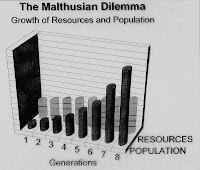
They call economics the “dismal science.” The term was coined by the 18th Century Scottish Philosopher Thomas Carlyle in response to the economic theories of the Reverend Thomas Malthus. Malthus was an early economist who predicted that mankind would starve to death because population growth would far exceed the growth of food production. According to the “Malthusian Theory,” population would grow geometrically while food production would only grow arithmetically eventually leading to the “Malthusian Catastrophe” of worldwide starvation.


Arithmetic Progression 1, 2, 3, 4, 5, 6, 7, 8

Geometric Progression 1, 2, 4, 8, 16, 32,


Malthus’ theory was wildly popular in its day. It was embraced as an obvious and inescapable truth. It was also, as we now know, wrong. It turns out that civilization learned how to increase food production at a rate that far exceeded population growth. Innovation won out over pessimism.

The Holy Roman Empire was neither holy, nor Roman, nor an Empire.

In most instances economics is neither dismal, nor a science. It is at best an inexact science and at worst a collection of flawed competing theories. These flawed theories get trotted out before an eager public anxious to embrace again the most dismal predictions during times of economic turmoil. Currently, one of the prophets of disaster making headlines is Peter Schiff. Known as “Dr. Doom,” Schiff is the son of the well-known tax-anarchist Irwin Schiff. “Dr. Doom” predicts that the US economy will collapse because of the lack of a manufacturing base coupled with rampant consumption. Schiff, who served as economic advisor to Presidential candidate Ron Paul, has been predicting this disaster for the last 20-25 years and his fans argue that he is now finally being proven right. Most serious academics dismiss Schiff’s theories as “Malthusian.”

We are enjoying sluggish times and not enjoying them very much.”

- George H. W. Bush -

Are we in a recession? As with all things economic, it turns out there are two competing theories. According to the traditional view, we won’t know until late February or early March of next year when we find out for sure that we experienced an economic contraction in the fourth quarter of this year. According to a second theory, we have been in a recession since December of 2007. The National Board of Economic Research made this announcement two weeks ago. Since most of us have known intuitively that this is a recession, I like the second theory. The different standards demonstrate a truth about economics: economists tend to tell us about economic cycles after-the-fact and not before.

How long will this recession last and how bad will it get? Since the end of World War II, the average recession has lasted a little over 10 months. The two longest recessions have both been about 16 months. The greatest economic contraction occurred in the first of these two long recessions beginning in 1973. The largest unemployment rate, 10.8% occurred during the second of these beginning in 1980.


Most experts are telling us this will be the worst recession since World War II. While almost undoubtedly true, this dire warning ignores the fact that post-WWII recessions have generally been mild compared to pre-WWII recessions. Pre-World War II, the average recession lasted 21.2 months. Post WWII recessions have lasted only half as long on average. Since the worst recession of the last 60 years lasted only 16 months, this recession only needs to last another 4 months to become the longest.
Average Length of US Recessions


Post-World War II 10.4 months

Pre-World War II 21.2 months


How will we know this recession is over?

Because of the way these things are reported, the economists will not notify us that the recession has ended until way after the fact. Not surprisingly, the best indicator that the economy is entering or exiting a recession is the stock market. About half the time, when the market declines 10% or more, we are entering a recession. 100% of the time, the stock market heralds the end of a recession with an advance that begins typically 6-9 months before the recession ends. Another signal to look for is a decline in the monthly increase in unemployment filings.

Slaying the Dragon

Economists disagree on how to fight a recession. Keynesian economists suggest that deficit government spending will re-inflate the economy. Supply-side economists suggest that lower taxes will spur corporate investment. These two competing theories go a long way towards explaining the political rhetoric dominating the American landscape today. I am a Keynesian. I like deficit spending. I also like lower taxes. One thing is certain, the Hoover administration created the Great Depression by raising taxes, tightening credit, and slashing government spending.


Different Approaches to Fighting a Recession

Keynesian economists deficit spending

Supply side economists lower taxes, especially corporate tax rates

Laissez-faire economists no government action

Populist economists direct payments to consumers


The Reagan Revolution

Supply-side economists point to Ronald Reagan’s success in ending what “was” the worst recession of the post-WWII era as a victory for tax cuts and the “trickle-down theory.” That argument misses the mark. The real credit should go to Reagan’s substantial deficit spending on defense. Reagan spent billions on defense; star wars, stealth bombers, Abrams tanks, and my personal favorite; refurbishing World War II battle ships to serve as platforms for the new cruise missiles. Reagan increased the federal deficit and defense spending at a record rate. He also created 2.8 million new jobs, the greatest bull market in history, and nearly two-decades of unprecedented prosperity. Take it from the “Great Communicator,” deficit spending works!

Friday, December 12, 2008

Filibusters and the Greatest Heist in History


Just a couple of comments. The short-term rally we were looking for got derailed temporarily this week by concerns about GM and the other Auto Makers.

It looks like President Bush is going to provide the bailout in the short-term out of the Tarp.

The Auto Bailout failed in the Senate last night by a vote of 52 in favor and 35 against. This was a strange result. A majority of the Senate was in favor of the bailout. They had the votes to pass the bill. BUT, they didn't have the votes to stop the Filibuster by the minority.

That minority was led by Richard Shelby of Alabama. Congress, the President, the President-elect, and a majority of the Senate were in favor of the bill, but one lone Senator was able to stop the whole thing with the help of 34 colleagues.

In some ways that is just crazy.

But even crazier was the news the that Bernard Madoff was arrested for perpetrating the largest theft in history. It turns out his $50 billion hedge fund was a giant Ponzi scheme. Madoff used to be chairman of the NASDAQ. He virtually invented it. He ran a number of large investment houses on Wall Street since 1960.

Adding a surreal quality to the story, Karen Finerman on CNBC's Fast Money said; "why admit it was a Ponzi scheme now. this market gave him the perfect cover. Just say you made some bad trades and lost all the money."

It is no wonder people are losing faith in the system, both Wall Street and the Government.

Here's some added irony from Madoff's website:

"In an era of faceless organizations owned by other equally faceless organizations, Bernard L. Madoff Investment Securities LLC harks back to an earlier era in the financial world: The owner's name is on the door. Clients know that Bernard Madoff has a personal interest in maintaining the unblemished record of value, fair-dealing, and high ethical standards that has always been the firm's hallmark."

I think we will see increased regulation of Hedge funds going forward. That's a good thing.

I think we will see increased regulation of derivative products going forward. Not just the debt swaps that got us into this mess, but the double and triple down ETFs that exaggerated the decline. Also a good thing.

I think we are back on track for a near-term rally. I remain optimistic in the short run.

Monday, December 8, 2008

Santa Claus is Coming to Town

This year for Christmas I want the same thing I always want: A Santa Claus Rally.

I must have been a good boy this year, because it looks like I'm going to get my wish.

Today's 350 point move to the upside is further confirmation that the market is poised for big gains. This may be the best Christmas ever.

Can you hear the bells jingling and the patter of reindeer feet?

My 2-year old son wants a Caterpillar front-loader he can ride and with CAT up $4.50 today alone he just may get it.

If you don't believe in Santa Claus that is alright, rallies like this need to climb a wall of disbelief.

Friday, December 5, 2008

Happy Days Are Here Again


"nameless, unreasoning, unjustified terror which paralyzes needed efforts to convert retreat into advance"


Many of you will recognize the the above quote as the end of FDR's immortal "We have nothing to fear but fear itself" line.

The line of his 1933 Inaugural Address that got the loudest ovation was "This nation is asking for action, and action now."

I have to give credit to George Bush, who stepped up to the plate again for the second time in the last two months to support an unpopular but extremely necessary bailout. I've not been a fan of George Bush for the last several years, but I intend to remember him as a man who responded to a nation clamoring for action in a manner that was heroic.

Bush's call to bailout the Auto industry helped the market immensely.

Today was a critical day. As you know, I have been predicted an imminent "Bear Rally" for about a month now.

Today's action is a strong indication that this Rally began on November 20th.

Over the first five trading days beginning 11/20 the market ran up 1277 points.

It then dropped 675 or 50% in one day.

The two days after this cataclysmic looking drop the market rose 442 points.

The next day it dropped 215 or 50% in one day.

That was yesterday.

Today we were up 259 points in what looks alot like an imminent break out.

I have said for awhile that I expect this "Bear Rally" to be huge and to carry us up to 10,500 on the Dow by mid-January. I'm sticking with that prediciton. I did not pluck that number out of a hat. 10,500 is about 42.5% off the bottom.

I have attempted to position us to take maximum advantage of this rally.

I expect to make alot of money in the next 6 weeks.

Obviously, the one potential cloud on the horizon is a Big Three bankruptcy, but I don't expect that to happen. (If it does, I may change strategy.)

The Great Recession


A couple of comments about the market and the Auto Industry.

The unemployment numbers came out today; the worst one month job loss since December 1974.

That brought total unemployment up to 6.7%, the highest since the early 80's.

The market didn't go down that much on that data. We were off 60-80 points in early trading.

Unemployment is a lagging indicator and I think those numbers are already discounted.

The bigger drag short term is GM and the others.

It is uncertain what will happen to GM and the bailout. Wall Street hates uncertainty.

My guess is that we will get some sort of bailout/restructuring.

My biggest concern is that in their earnestness to punish the UAW that Congress not force a plan on GM that wipes out the debt holders.

If we wipe out the GM debt, Congress is going to have to give AIG another $100 billion or so. The reason for this is an instrument called a Credit Default Swap known colloquially as Bond Insurance. There is insurance on all of those bonds and AIG is on one side of most of them. Startlingly, bond holders were able to enter into these transactions for more than what they owned. Some holders may have insured their auto bonds for twice what they were worth. The cost of paying out those losses could be monstrous.

Additional costs: every 500,000 of jobs lost costs 10-20 billion in unempolyment benefits.

As much as I agree that GM and the others need to be restructured and the UAW contracts have to be renegotiated, I hope that Congress looks at the cost of not doing something and sees the obvious truth that the cost of letting these companies go into bankruptcy could be far greater than $34 billion.

On our side, we own cheap stocks. We own more cheap stocks than we did 3 months ago, 6 months ago, 1 year ago, and 18 months ago. We have been buyers here at these low levels. In my mind that was and is the smart thing to do.

Tuesday, December 2, 2008

GM's Wagoner to travel by car to Washington


In 1077, the Holy Roman Emperor, Henry IV, famously stood barefoot in the snow for three days outside of Canossa Castle seeking an audience with Pope Gregory VII. In an event know as the "Walk to Canossa," Henry had come barefoot and in a hairshirt to plead with the Pope to lift his ban of excommunication.

Almost a millenium later, GM CEO Rick Wagoner began his own "Walk to Canossa."

GM announced today that Wagoner will travel the 520 miles to Washington and his next meeting on Capitol Hill in a Chevy Malibu hybrid sedan. Wagoner is coming to plead with Congress for the bailout money he say's GM needs to survive.

Monday, November 24, 2008

Opportunity of a Lifetime


We think this is an incredible opportunity to buy stock and get rich.

2008 is currently the second worst year in stock market history. The only worse year is 1931.

Stocks are selling at 30 years low relative to earnings and 50 year highs relative to dividend yields.
.
.
.
.
.
.
.
.
Worst Years in Market History
Since 1925

1931 -43.84%
2008 -37.56% *
1937 -35.34%
1974 -25.90%
1930 -25.12%
2002 -21.98%

* Through close on November 12, 2008


This morning we purchased the following stocks:

Caterpillar
BP
GE
3M
US Bank Corp.

I have also been looking at some of the accounts to add to our positions in Bank of America.

On Thursday we bought some more Citigroup ar $5.11.

I don't want to be in too much of a rush, but expect us to buy more stock over the next several weeks.

We expect Washington bail out the auto industry and implement a major stimulus package over the next several months.

We believe that the market will be substantially higher by mid January-early March.

Monday, November 3, 2008

Vote Early and Often


Elections tomorrow. I love Election Day. Since I was a kid, I have always liked sitting in front of the TV and watching the election results with my family. That is what I will be doing tomorrow night. I'll probably make a bunch of phone calls. Feel free to call my cell phone if you want. I'm always pretty excited on election night.

I've always loved politics even as I grew to hate politicians. I remember when I was 12, I replaced my Mother's sink so that I could stay up late and watch a McGovern infomercial. Politics, and particularly Presidential politics are just fun.

I wanted to share some thoughts on the market and these elections.

The market expects Obama to win. An Obama victory is already priced into the market. Should McCain pull off one of the greatest upsets in political history, I would expect the market to initially react negatively. Wall Street hates surprises and the civil distress and negative world reaction that would likely accompany that upset would be unsettling for the markets in the short-term.

In the longer term, I expect the economy and the stock market to recover regardless of who wins tomorrow.

Manufacturing hit a 26 year low last month. The lowest levels since September of 1982....one month after the beginning of the longest, greatest, and most powerful bull market in history.

I also think that it will be good to have this race finally come to an end. Political elections are divisive. They spread fear. Each party seeks to cast the opposition in such a negative light that it is hard not to buy into the fear. The news media hard sells the fear in order to keep you tuned in. By the end of the process, the country is divided into two camps each absolutely certain that the world will come to a quick and horrific end if the other guy gets elected.

Despite those fears, we've managed to survive and prosper through 55 Presidential Elections and I imagine we will survive a few more.

Thursday, October 30, 2008

Bad News is Often Good News

One of the things that always fascinates me about the market is how seemingly bad news can often spark a rally.

This morning it was announced that US GDP declined in the third quarter. If we get another decline in the fourth quarter we will officially be in a recession.

We will find out if we got that second quarterly decline sometime toward the end of February 2009, or maybe the beginning of March.

As I've been telling you all, we've been in a recession for at least 9 months now.

Today's news signals to the market that we are already starting to come out of the recession.

That is why the market spiked up on seemingly bad news.

And this highlights the problem of getting your investment advice from the news media. The news media focuses on the current news, the stock market focuses on the predicted news in the future.

History says that stocks begin to rally 60% of the way through the recession. Are we there yet? I'm not sure, but we are close and likely to be there when the news media and the economists are ready to offically announce that we have been in a recession. Again, look for that announcement in late February or Early March of next year.

We still think this current rally will carry us to 10,500 - 11,500 by mid-January.

Stand Fast!

Friday, October 17, 2008

Oh, What a Day!


I was in one play in my life. I was a senior in High School and I auditioned for a Role in the “Mad Woman of Chaillot.” Frankly, I tried out because I was trying to get a date with a girl named Pam. I got the part, but not the date. It was a nice Cameo. I played the role of the “Stockbroker.”

I don’t remember my lines exactly, but it was something about the market going up, up, up and then down, down, down, and then up, up, up and then down, down, down….and then finally up, up, up!

My opening line when I walked stage was “Oh, what a day!”

For obvious reasons, I have been thinking about that speech a lot recently. I guess that this is an example of life imitating art.

Today I began going through each and every account individually and buying stocks that I thought were appropriate for your account.

The market is low; we built this large cash position for a reason and I think now is what we have been waiting for.

Depending on what you owned already and what you didn’t own I bought you some stock today.

I don’t think I ever bought this much stock in one day in my life.

Don’t get too scared, we still have plenty of cash.

The following is non-complete list of what we bought:

Colgate
Proctor&Gamble
Johnson&Johnson
Intel …….$15!
Citigroup (We sold this on Monday at $18.70 and bought it back today at $15.)
Bank of America
Coca-Cola
3M
Progress Energy
Bristol Myers
Pfizer
Sysco Foods
Kraft
Duke Power

We also bought a block of Caterpillar. The stock is at $41 down from a high of $96 earlier this year.

AND, a block of Yum brands.

Thursday, September 25, 2008

The Long Winter of Our Discontent


This is a follow up to my previous article.

I want to talk a little about this 9 year Bear market. This is what I am calling this period of time.

Others disagree and call the last nine years a series of Bear and Bull Markets. Bear-Bull-Bear. I see that 2005-2006 "Bull Market" as a correction in a longer term Bear market.

What we have lived though 90% of is a period very similiar to the period 1972-1982.

On October 1st 1972, the Market hit a high of 1020. The Dow rose and fell over the next 10 years before finally rising over 1000 permanently in October of 1982 when the Dow closed at 1046.

On October 1st of 1999, the Dow closed at 11497. Today the Dow closed at 11022. For the past 9 years the Dow has risen and fallen without making any meaningful advance.

But, what happened in 1982? The Dow began a 20 year advance that carried stocks to previously unimaginable heights. The Dow went from 1000 to 11497.

So, what will happen at the end of this long hibernation? The Dow will rise to unimaginable heights. We are talking about a Dow Jones of 50,000-100,000.

This won't happen over night and this won't start tomorrow. But, this will happen. History repeats itself.

Crisis Averted


Today we got some more good news from Capitol Hill. Lawmakers came together and have reached an agreement to fund the $700 billion "bailout" of the financial industry.

I was surprised how many people and how many commentators were against the idea.

As I wrote last week, the alternative was a financial disaster of unprecendented proportions.

Imagine a world where you can't borrow money to buy a car or a home. Where many companies could not borrow money to finance their operations. Companies like GM going out of business as a result.

I think we were looking at skyrocketing unemployment, maybe as high as 20-25%. Massive bank closings. Frankly, I felt that the the cost of paying out the FDIC claims would have been far greater than the "cost" of the bailout. That was easy, because the "cost" of the bailout is negative.

The government will make money on this. They will buy these mortgages for less than they are worth and eventually will turn a profit. That is what happened in 1991 with the Resolution Trust Company.

There is one problem with this plan, the Treasury will need to borrow more money to finance the purchase of these bonds and that is inflationary and bad for the dollar.

I believe we are in the tail end of a bear market that is about to celebrate it's 9th year. That is a long bear market. One of the four longest in the last 108 years.

I don't think that we are about to see the market take off. I do think we have seen the bottom. That bottom is around 10,800 on the Dow.

Over the next several weeks, we will look to modestly restructure our portfolios to take advantage of the next 6-18 months. Looking out past that period, we can begin to see the outlines of another robust Bull Market forming that will carry stocks into new, as yet unimagined, territory.

Thursday, September 18, 2008

"Fear Strikes Out"


Yesterday was another tough day.

I expected a big decline on Monday and the rally we got on Tuesday.

I thought that, in light of the AIG bailout, we might see something more normal on Wednesday. Perhaps even a rally.

Instead we opened down 300 points.

I was a little depressed and I went home for lunch. (Something I almost never do even though it is only 10 minutes away.) I wanted to hug my son. Alexander is now 2 1/2 and still cute as can be! He still doesn't talk much and is struggling a little getting potty trained.

I walked in and he saw me and started chanting, "I go potty. I go potty."

Sharon said she was mad at him and I asked why and she said, "Alexander tell your father why I'm mad at you."

"I pooped my pants," he said.

I started laughing and almost immediately felt better. There are a lot of things in life more important than work and money and while the content of his sentence wasn't all that wonderful, hearing him utter another complete sentence was music to my ears.

I came back to the office somewhat refreshed and invigorated and had a number of good conversations with clients, friends, and others I trust.

HERE IS MY TAKE ON WHAT IS GOING ON RIGHT NOW

We are all standing nervously in front of two doors.

One of those doors leads to oblivion, a complete collapse of the world economy, a return to the dust bowl era of the Great Depression.

The other door leads us through the final throes of this agony into the light of a new day.

I don't see a third option. It seems to me that it is one or the other; either things are going to get better or we are headed towards a financial disaster of Biblical proportions.

I believe that the signs point towards door number 2. I don't think we are headed into a second great depression.

As bad as the market has been this week, most of the damage has been in the financial sector. (General Mills was up a $1 today.)

There is a long history of a major brokerage house falling, as Lehman Brothers did the other day, at the bottom or end of a decline.

Oil is down.

Inflation is no longer a concern.

Manufacturing remains strong.

The economy has problems, but those problems are fixable.

Today, Thursday September 18th.

This morning, after thinking about what I had written yesterday as I stared down my fears, I purchased two stocks: Citigroup and United Technologies.

Citi is down 73% from its all-time high and more than 30% from when I sold off half of our position earlier this year. The stock has an 8.5% yield. Those kind of bargains just don't come along every day!

United Technologies is down 30% this year, with a 2% yield, a P/E of 13, and a growth rate of 11%. It is a great manufacuring company and the only reason it is down so much is that everyone is in a panic.


This afternoon, we got great news. Treasury Secretary Henry Paulsen announced a plan to create a government entity similiar to Resolution Trust Company that would buy up the bad debt in exchange for some Equity and save the banking system.

THE MARKET IS UP 400 POINTS!

Tuesday, September 16, 2008

"The oldest and strongest emotion of mankind is fear." HP Lovecraft.


"I steer my bark with hope in the head, leaving fear astern. My hopes indeed sometimes fail, but not oftener than the forebodings of the gloomy. " Thomas Jefferson


Fear is rampant.


Watching the Television Media last night I came away with three persistent messages.


1. The world is coming to an end.
2. A group of people think that Obama is the devil.
3. Another group of people think that McCain is the devil.

There is a famous quote from the '70s that my Father liked: "The medium is the message," by Marshal McLuhan.

I think it has become starkly evident that the current medium is fear-mongering and the message is, not surprisingly, fear.

Things are bad. They've been bad for over a year. We should never have allowed anybody to get a mortgage on anything at any rate with nothing down and no collateral. That statement seems self-evident. But, where was the media when the problem was brewing? Were they warning against the obvious excesses of that course? By and large the answer is no! In fact, if we flash back to that time one would have gotten the impression that anyone who wasn't taking advantage of nothing-down, interest only, financing to buy seven condos under construction in Las Vegas was just plain stupid.

The media is good at reporting what just happened and absolutely atrocious at predicting the future. Attempting to use them as a guide is as useful as using a list of directions for a trip we made last month to attempt to go someplace new.

LET ME ADDRESS ANOTHER FEAR.

A handful of people have sent me e-mails or called asking how safe their assets are at Schwab. I think this is a good question and one that is probably on other people's minds. Perhaps it is on yours.

Here is the answer to that question for anyone who is wondering.

YOUR ASSETS AT SCHWAB ARE INSURED:

Your assets at Schwab are insured by two insurance policies. One of those is Federal. One is from Lloyds of London.

Both insure you against Schwab's default.

The federal policy is from the Securities Investor Protection Corporation which was chartered by Congress. This policy insurances your assets up to $500,000.

The second policy is from Lloyds of London and provides protection up to $600,000,000

It is important to note that these policies protect you against loss in the event that Schwab were to go into default or declare bankruptcy. They also protect you if someone at, or associated with, Schwab was to attempt to steal your assets.

It does not protect you against normal market risk.

One final thought. Through all of this credit crisis, the discount borkerage firms like Schwab and Scottrade have not been mentioned negatively. They do not engage in the type of investment banking and trading activities that got others into trouble. So, I do not expect any problems at Schwab.

Thursday, September 4, 2008

Election Dip


It is election season and the market doesn't like it.

The stock market rarely does well during a Presidential Election Campaign, particularly when the outcome of that election is in doubt. The more divisive the rhetoric, the less happy the market becomes!

I think that for the past few days, the market has been reacting to the news from the Campaign Trail. Negative rhetoric from both sides, coupled with a growing certainty that Obama will be the next President and the incredible soap opera swirling around Republican VP nominee Sarah Palin have deflated the value of stocks and overshadowed some positive economic news.

As of today the London Bookmakers have placed the following odds on our elections:

Obama 4-9 to win. (A 9 Pound bet will win 4 Pounds if Obama wins.)

McCain 13-8 to win. (An 8 Pound bet will win 13 Pounds If McCain wins.)

Palin will be replaced before the election 8-1. (A one Pound bet will win 8 if Sarah Palin leaves the ticket.)

Although it is early and the odds could change, in the past the London Bookmakers have almost always correctly predicted the outcome of our Presidential elections. (I’ve always found it interesting that you can bet on political elections in England, but not in the US. And I think it is a tribute to the US that we don’t allow the process.)

Here is my take on what we will see over the next several months. I think the perception will grow that Obama will win. I think that the market will grow increasingly skittish regarding the perception of the Democratic ticket’s rhetoric regarding taxes and healthcare. You may remember that in 1992, the stock market deflated when then First Lady, Hillary Clinton, spoke out in favor of nationalized health care.

The economic news, which has been getting better recently, will continue to improve. Oil is declining. Commodity prices are plummeting. Both bubbles have burst. The dollar is getting stronger. The credit crunch will lessen. Housing will hit bottom sometime in 2009.
The one potentially troublesome issue on the economic front is, and will continue to be, the threat of inflation.

On the positive side for you, our stocks continue to be the right stocks on a relative basis and our large cash position continues to soften the blow of this decline.

We will continue to be defensive. We will continue to strive to protect your assets. We will also be hopefully and guardedly optimistic that the US stock market will emerge from this eight-year long bear market sometime in the not too distant future.

The Silver Lining = Long-term bear markets of the sort we have lived through are usually followed by periods of explosive growth. If history is any indication, investors who have faith and patience through the final days of this painful period will be amply and substantially rewarded in the coming rally.